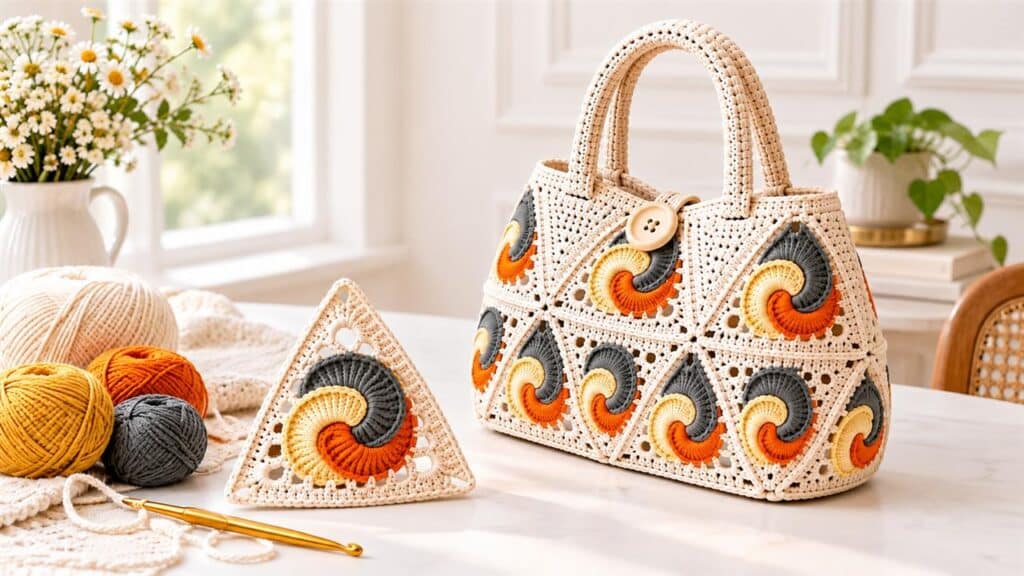
If you love crochet fabric that looks decorative but still feels practical and wearable, this puff shell crochet stitch is a beautiful technique to add to your repertoire. Raised clusters form soft, rounded shells across the fabric, while small chain spaces keep the design airy. The result is a balanced texture that can look equally at home in a lightweight cardigan, cozy blanket, scarf, cushion cover or baby project.
This English guide explains what to watch for as you follow the video, how to keep the clusters even and how to adapt the finished fabric to different projects. Because the tutorial itself is the primary source for the exact stitch counts and repeat, keep the video nearby while you work each row.
Puff Shell Crochet Stitch Video Tutorial
Why This Textured Crochet Stitch Works
The charm of the pattern comes from contrast. Plump puff or shell-style clusters create dimension, while the open spaces between them prevent the fabric from becoming too heavy. Repeating horizontal bands give the eye a clear rhythm and make the stitch especially effective in solid colors. A sunny yellow emphasizes the shadows between the raised stitches, but neutrals, pastels and jewel tones can all produce striking results.
The stitch is also versatile. Worked in a smooth yarn with a relaxed gauge, it can drape nicely for clothing. Made with a slightly denser gauge, it becomes warm and structured enough for home accessories. Always make a swatch first when size, fit or yarn quantity matters.
Materials and Yarn Suggestions
- Smooth yarn in the weight recommended for your project
- A crochet hook that creates comfortable, even tension
- Scissors and a yarn needle for finishing
- Stitch markers to identify the first and last repeat
- A ruler or tape measure for checking gauge
A smooth, light-colored yarn makes the anatomy of each cluster easier to see while learning. Highly textured or fuzzy fibers can hide the insertion points, so save those for after the repeat feels familiar. For garments, choose a fiber with enough softness and drape to sit comfortably against the body.
Understanding the Foundation Repeat
Begin with the foundation setup demonstrated in the video and use its exact multiple and turning instructions. A foundation that is too tight can pull the lower edge inward, while loose starting chains may create gaps. If your chains tend to be tight, consider using a slightly larger hook only for the foundation, then return to your working hook.
Before starting the textured rows, count the available spaces and place markers at the boundaries of the repeat. This small step helps reveal a missed stitch before it affects the entire row.
Forming Even Puff-Shell Clusters
The raised motif depends on consistent loop height. Draw each loop up to approximately the same height and avoid squeezing the hook as the cluster grows. When closing the group, guide the hook through the loops steadily so they do not snag or twist. A relaxed working hand produces rounder, softer clusters; excessive tension can make them narrow and difficult to close.
Pause after several motifs and compare their height. If one shell appears smaller, your loops may be too short. If it looks floppy, they may be too tall. Consistency matters more than speed, especially on the first practice swatch.
Keep Chain Spaces Open and Rows Straight
The open chain spaces are part of the design, not empty filler. Keep them relaxed enough to preserve the airy rhythm, but not so loose that the fabric loses structure. On the following row, insert the hook into the location shown in the video rather than guessing from the front view of the fabric.
Count the clusters and spaces at the end of every row. Straight sides depend on correctly working the first and last repeat and following the turning-chain instruction. If the swatch narrows, a final space may have been skipped; if it widens, an extra stitch may have been added at the edge.
Project Ideas for the Puff Shell Stitch
A cardigan is a natural choice because the open areas offer breathability and the raised shells add visual interest without complicated colorwork. For clothing, make a generous gauge swatch, wash it as you plan to wash the garment and measure again after drying. This reveals how much the fabric relaxes and helps you choose a size accurately.
The same stitch can become a baby blanket, throw, wrap, scarf, table runner or decorative pillow. For a blanket, consider a simple border that stabilizes the edges without competing with the texture. For a scarf or wrap, a lighter yarn and larger hook can create graceful movement.
Color, Drape and Finishing
One-color projects showcase the shadows and sculptural quality of the motif. If you prefer stripes, change color at a clean row boundary and carry the palette consistently. Test every color plan in a swatch because strong contrast can make small irregularities more visible.
When the piece is complete, weave in ends securely without pulling the fabric out of shape. Gentle blocking helps open the chain spaces and align the rows. Follow the yarn label: steam should never touch fibers that can melt, and vigorous stretching can flatten the puffs.
Common Problems and Quick Fixes
- Clusters are hard to close: loosen the drawn-up loops and keep the hook head facing through the loop bundle.
- Puffs look uneven: match loop height and maintain the same hand position for every cluster.
- Edges are narrowing: recount the final repeat and mark both edge stitches.
- Fabric feels stiff: try a larger hook or a yarn with better drape.
- Open spaces look oversized: relax the clusters but slightly control the chain tension.
Frequently Asked Questions
Is the puff shell crochet stitch suitable for beginners?
It is approachable for confident beginners who know basic crochet movements and can maintain tension. Practice on a small swatch before beginning a fitted garment.
Can I use this stitch for a blanket?
Yes. The repeating texture suits blankets beautifully. Choose a washable yarn, check the finished weight and add a stabilizing border if desired.
How do I know the correct starting-chain multiple?
Follow the exact multiple and setup shown in the embedded video. The count can vary with the instructor’s version of the stitch.
Should I block puff stitches?
Gentle blocking can align the rows and open the lace spaces, but avoid heavy stretching that flattens the raised texture.
Save This Crochet Stitch for Later
Pin the image below so you can return to the tutorial when you are ready to make a textured cardigan, blanket or accessory.